
Wollaston Heritage
The Changing Face of the High Street
From Edwardian postcards to the present day — a photographic journey along the street at the heart of Wollaston village life.
The High Street has been the commercial and social spine of Wollaston for centuries. The ironstone and brick buildings that line it today are largely the same ones that appear in Edwardian postcards — the shopfronts changed, the street widened and paved, but the bones of the street remain.
We are building a photographic record of the street across time. If you have old photographs, memories of particular shops or businesses, or can identify buildings and people in our archive images, we would love to hear from you.
Archive
Photographs of the High Street
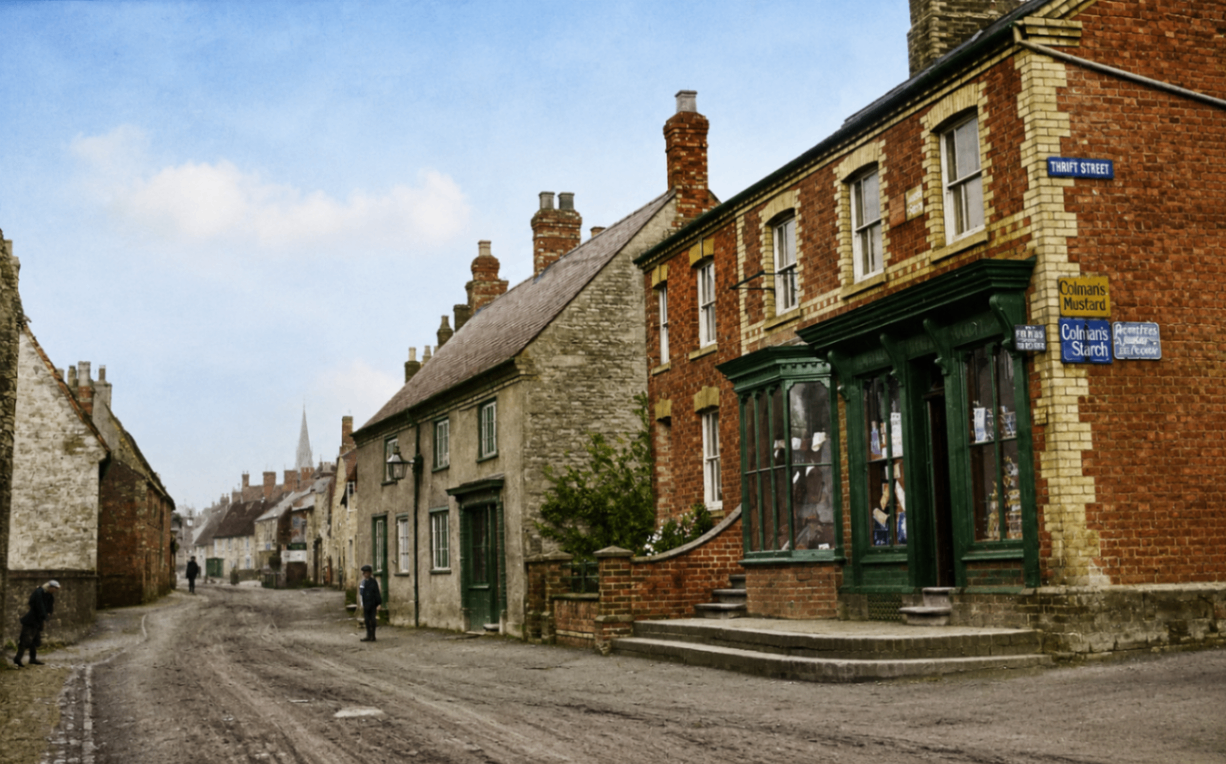
c.1910High Street at Thrift Street — c.1910
A hand-tinted postcard looking south towards St Mary's spire, taken from the junction with Thrift Street. The corner shop advertises Colman's Mustard & Starch — today this is Els Bakes. Two figures stand in the unpaved road; the ironstone cottages stretch away towards the church.
 c.1905
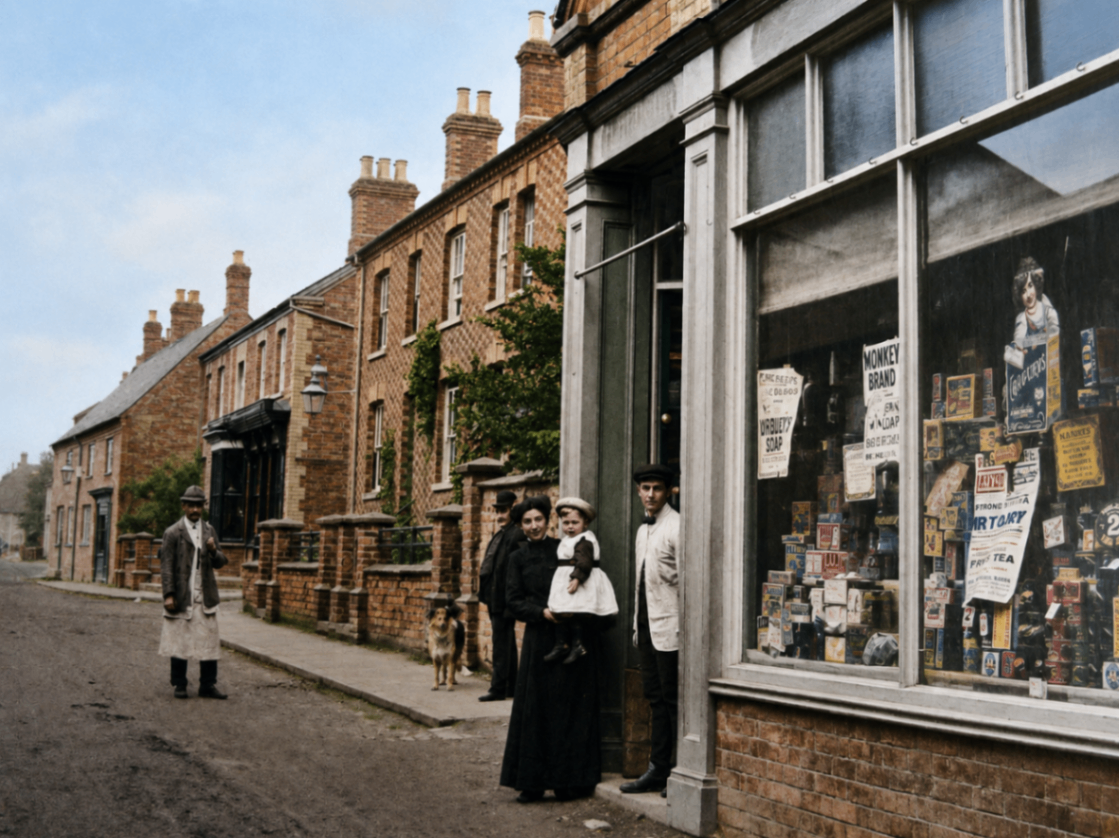
The High Street Co-Op — c.1905
A colourised photograph of the Co-Op corner store. The shopkeeper stands in his white apron alongside a woman, a young man and a collie dog. The window is packed with Monkey Brand Soap, Colman's, Orbuy's Soap and tea tins. The ironstone terrace stretching left is still clearly recognisable today.
 c.1910
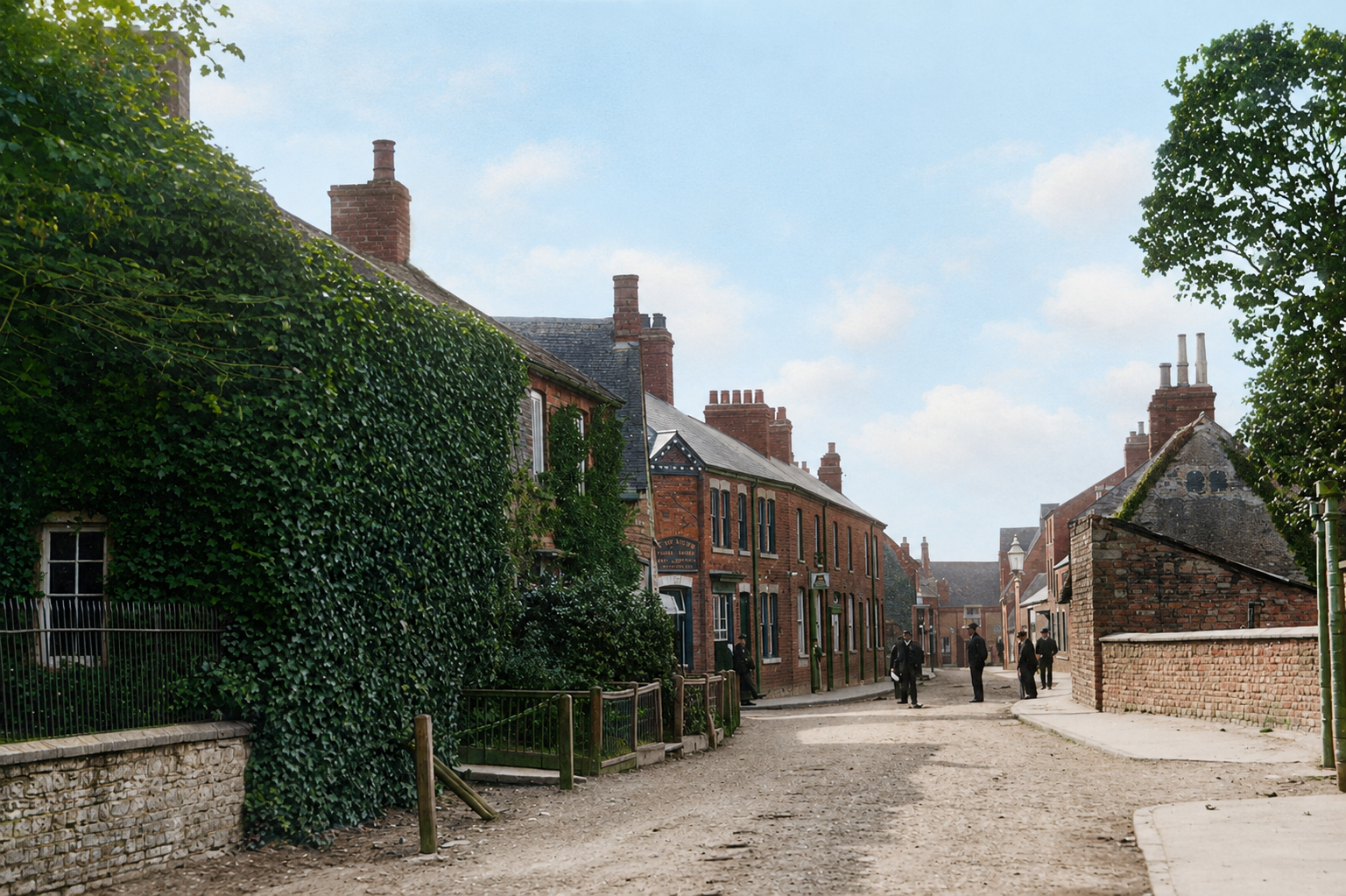
High Street looking north towards London Road — c.1910
A colourised Edwardian photograph looking north up the High Street towards London Road. The ivy-clad ironstone cottage dominates the left foreground behind iron railings; a shopfront with a painted fascia board — likely a baker or grocer — stands mid-street on the left. A gas lamp rises on the right beside a limestone boundary wall. Four or five figures in Edwardian dress stand in the unpaved road. The brick and ironstone terraces stretching away to the right are still recognisable today.
 1920s–1930s
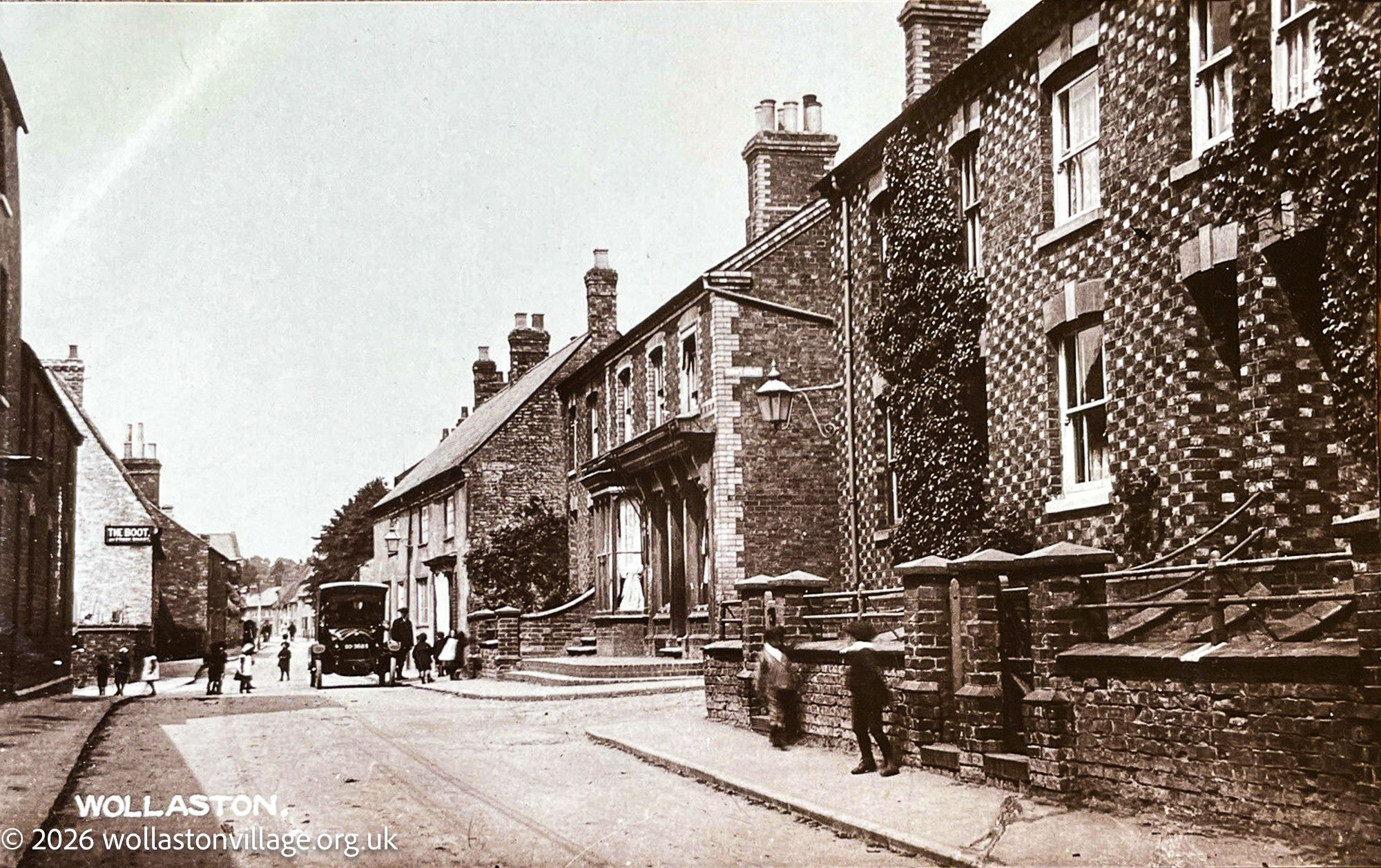
High Street looking south — c.1920s–1930s
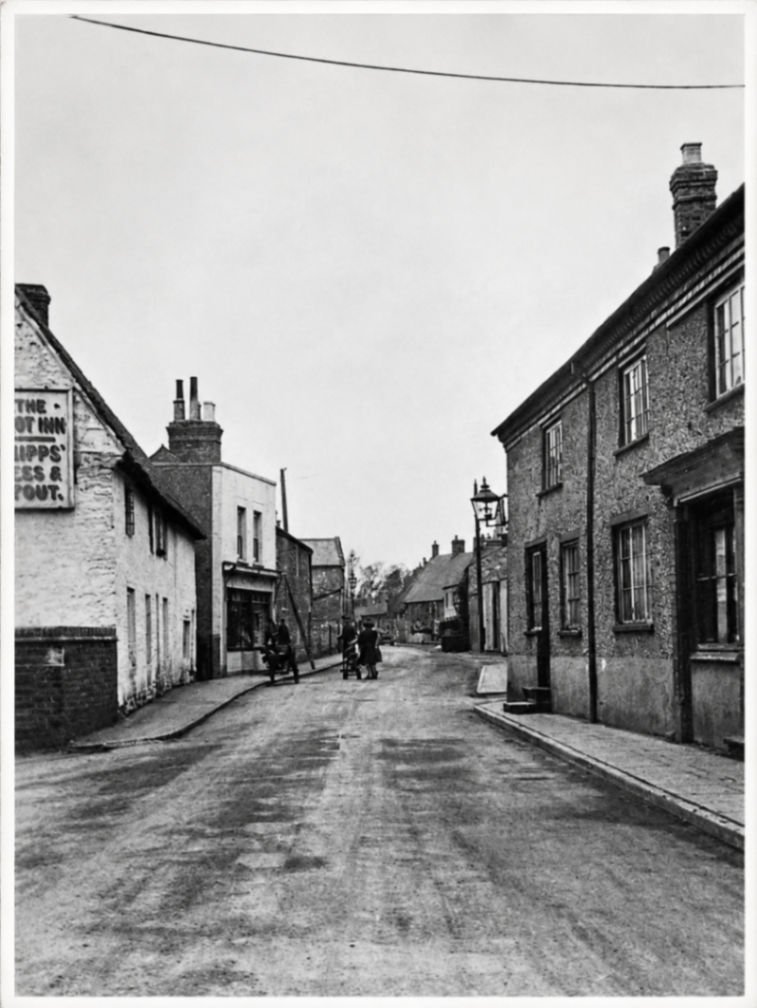
The High Street looking south towards St Mary's spire, with the whitewashed gable of The Boot Inn on the right advertising Phipps' Ales & Stout. A gas lamp stands at the junction and two women with prams make their way along the road. The presence of an early motor car suggests a date in the 1920s or early 1930s — pre-war rather than mid-century. The buildings on the left remain largely recognisable today.
 c.1988–1994
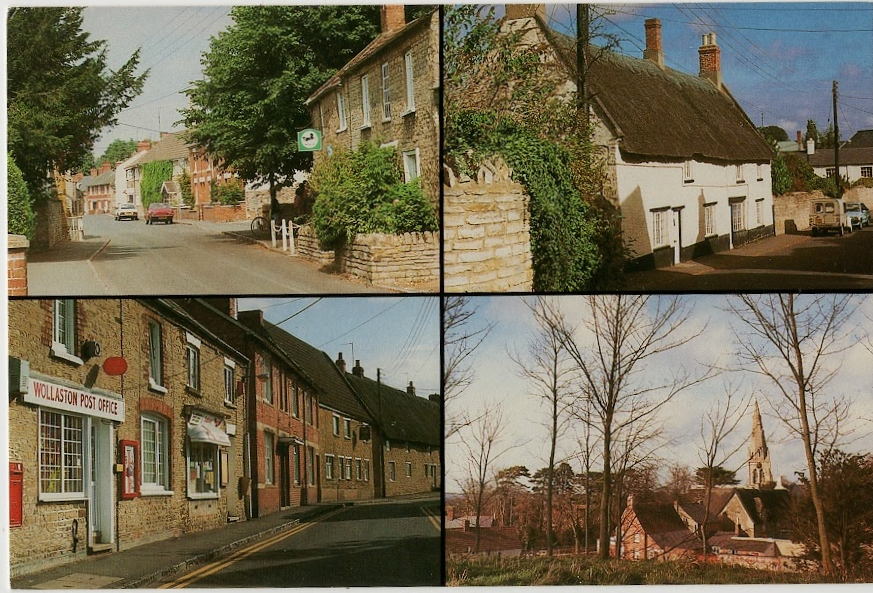
Wollaston — four views postcard, c.late 1980s–early 1990s
A colour postcard (No. 139 in the Northamptonshire Heritage Collectors Cards series) produced specially for Wollaston Post Office by Photographic Heritage, with photographs by Gordon Flanagan. The four views are: High Street looking north; High Street looking south; Hickmire; and the Church from Beacon Hill. The 0933 telephone prefix dates the card to before the 1995 Wellingborough area renumbering.
 Early 20th century
High Street — The Boot Inn
A view of the High Street showing The Boot Inn, one of the village's historic public houses. The name is a fitting one for a pub in a village built on the boot and shoe trade. The ironstone and brick frontages are characteristic of the village centre streetscape.
Then & Now
The same buildings, a century apart
The ironstone and brick frontages of the High Street have changed remarkably little in over a hundred years. These pairings show the same buildings across time.
Thrift Street corner — now Els Bakes
The corner building at the junction of High Street and Thrift Street has been a shop for well over a century. In c.1910 it sold Colman's Mustard & Starch; today it is home to Els Bakes, one of Wollaston's most beloved independent businesses.
c.1910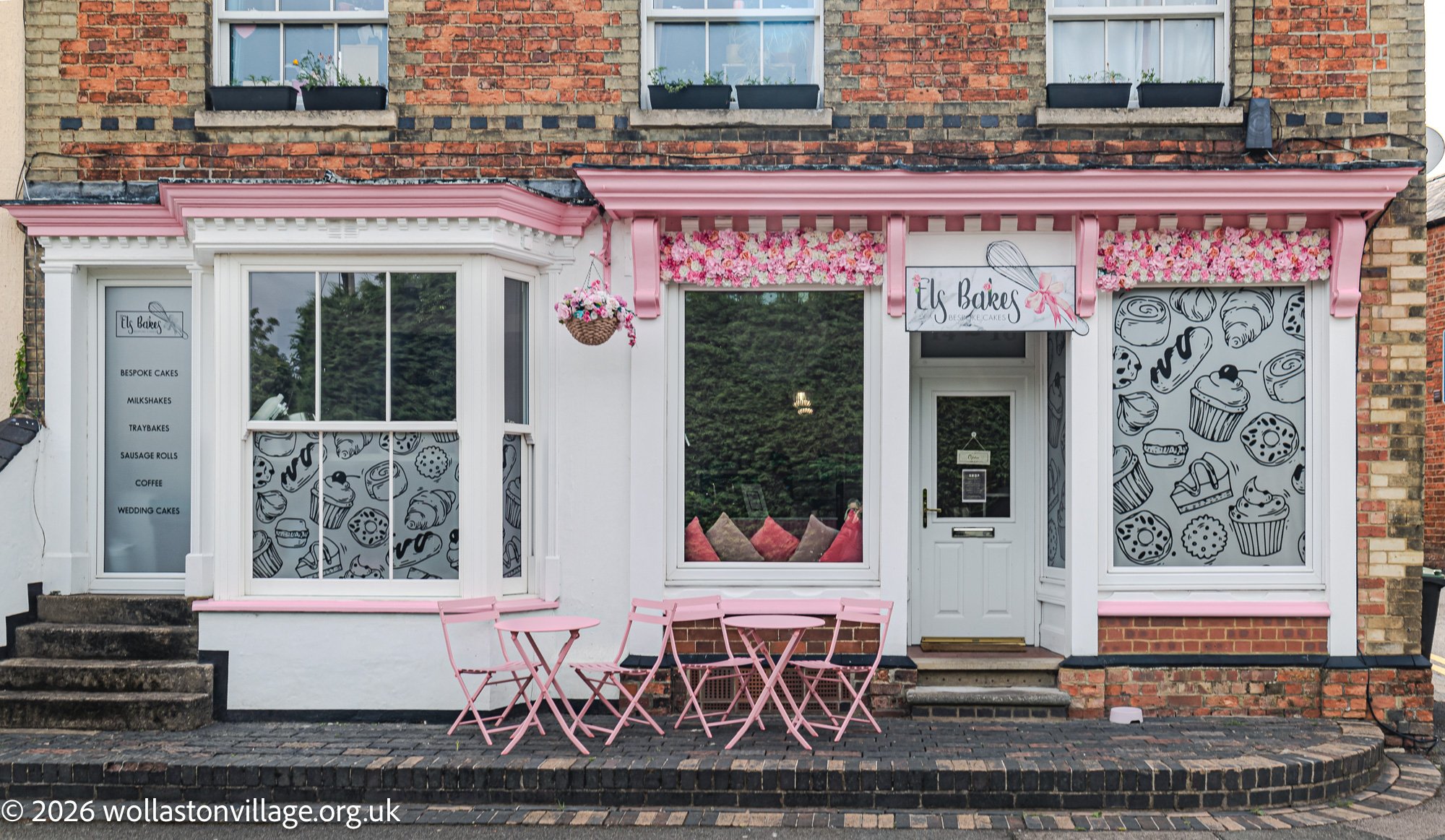 2026
2026The Co-Op corner store
The Co-Op was a central institution in Wollaston's High Street for generations. The colourised photograph shows the corner store c.1905 packed with groceries and household goods. The ironstone terrace is unchanged.
c.1905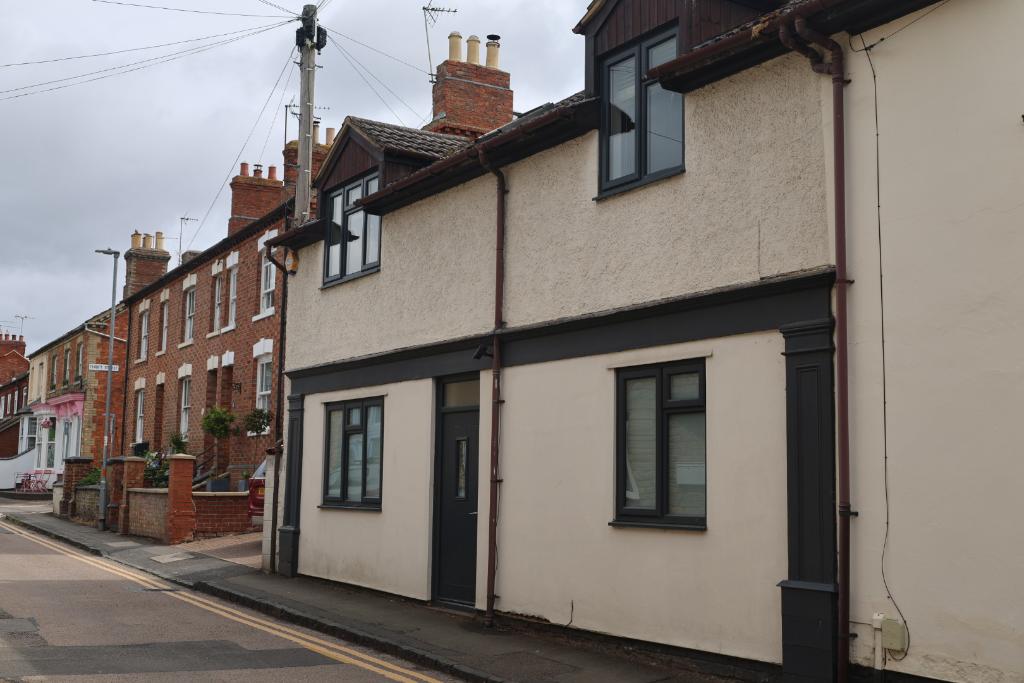 2026
2026History
The High Street through the centuries
A market town street
The High Street was the commercial spine of Wollaston long before photography. Ironstone and brick buildings lined both sides, housing tradespeople, craftsmen and the inns that served travellers on the road between Wellingborough and Northampton.
Edwardian commerce
The Edwardian era left us the richest photographic record. Hand-tinted postcards show a street busy with small shops — grocers, drapers, the Co-Op — alongside the boot and shoe workshops that were the economic engine of the village. The road was still unpaved.
Between the wars
The interwar years saw the Co-Op expand and consolidate. The Boot Inn and other public houses remained fixtures. The boot and shoe trade continued to dominate employment, with many High Street families connected to the factories and outworkers.
Post-war change
The post-war decades brought gradual change — some shops closing, others changing hands. The Co-Op eventually moved to Newton Road. The street began to shift from a working commercial centre to a quieter residential and mixed-use street.
The High Street today
Today the High Street retains its historic character — the ironstone and brick frontages largely intact, the church spire still visible at the southern end. Independent businesses like Els Bakes keep the street alive, while the buildings themselves carry 200 years of village history.
Do you remember the High Street?
We are looking for old photographs, memories of specific shops and businesses, and help identifying buildings and people in our archive images. If you grew up in Wollaston or have family connections to the village, we would love to hear from you.
Primary source
The High Street in 1910 — Kelly's Directory
Kelly's Directory of Northamptonshire (1910) records the traders and businesses operating in Wollaston at the height of the boot and shoe era. These are the real names behind the shopfronts in the Edwardian postcards above.
Bakers
Brown, Thomas Martin
Holley, Elizabeth
Murdin, Frederick
Hairdressers
Drage, Ephraim
Howe, Ernest
Shopkeepers & Grocers
Co-operative Industrial Provident Society Ltd
and others — see directory
Butcher
Williams, James
Fishmonger
Stubbs, John William
Farrier
Boyson, Edwin Thomas
Wheelwrights
Lovell, W. & Son
General Smiths
Summerlin, John
Summerlin, Charles
Cycle Repairer
Sherwood, Geo. Edmd.
Source: Kelly's Directory of Northamptonshire, 1910. Names are transcribed as recorded. This list is not exhaustive — the directory also records boot and shoe manufacturers, farmers and professional residents separately. The village's three public houses — the Nag's Head, Crispin Arms and Bell Inn — are covered on the Village Pubs page.